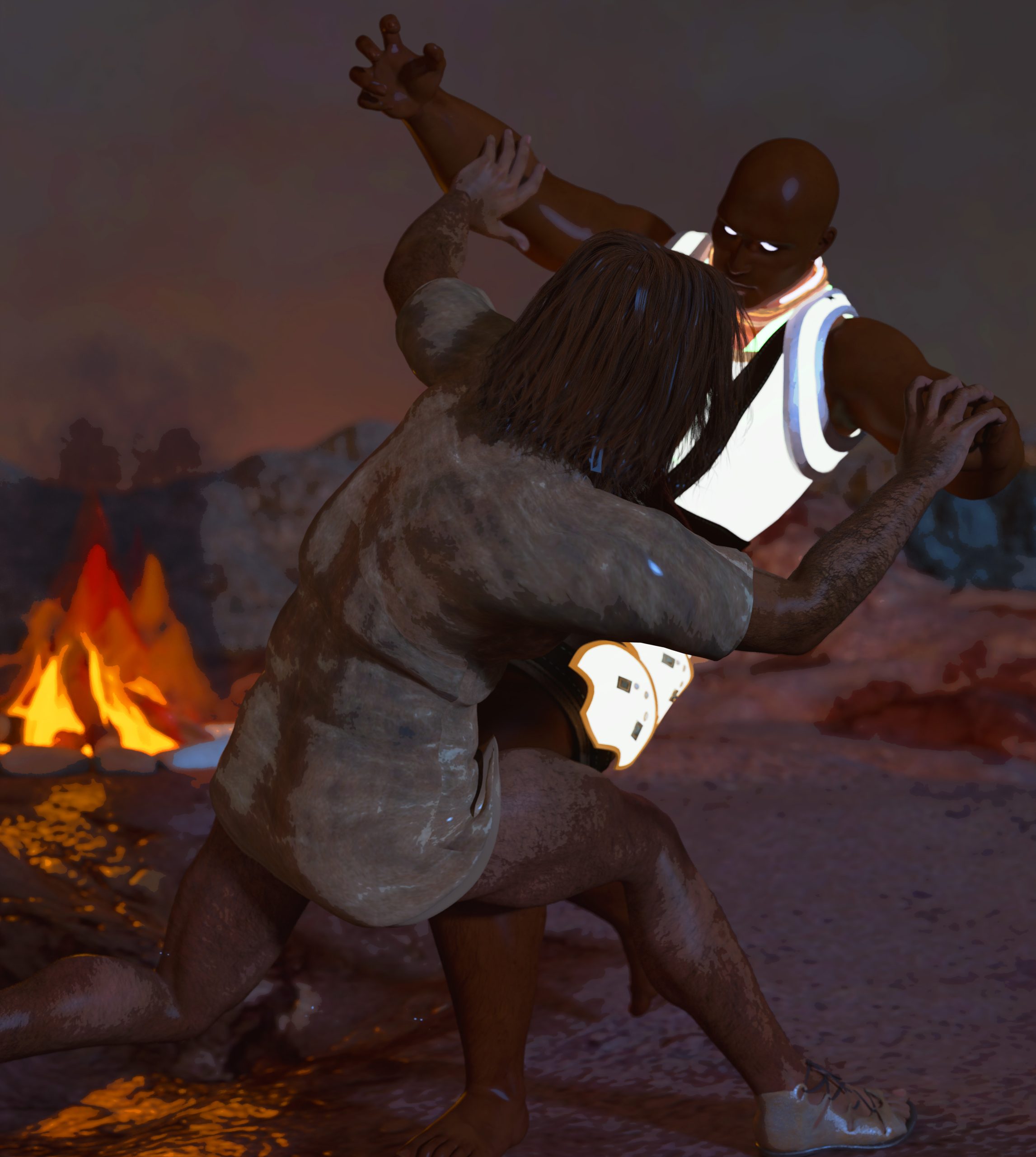
Growing up, I had a number of challenges to navigate. I was a skinny kid. My family moved at an alarming pace, as my dad spent years going from job to job and industry to industry. I was picked on a lot. All the while, I read voraciously and maintained a vivid imagination.
From an early age, I questioned things, though not always successfully. As a kid, I couldn’t explain to my parents that when I said I could eat pizza for every meal, I did not mean the same pizza. I saw the bigger picture, that pizza was full of so much greater diversity than frozen cheese.
After my conversion experience at thirteen, my inquisitive nature was somehow in opposition to my newfound religious practices. My teen years were spent being told to adopt blind, childlike faith, to “do all things without murmuring and arguing” (Philippians 2:14), to not be a Doubting Thomas, that if I had enough faith, I wouldn’t need to question. Just trust and obey, and it would all be okay.

But what about Jacob? Jacob who wrestled with God. Who probably thought at first he was defending his people from a vengeful Esau, but only towards the end realized he was fighting a different person altogether. Whose name was literally changed to “struggles with God” (Israel). Then there was Moses, who pushed back on God’s plan repeatedly, and God met each objection with reassurance and help, such as sending Aaron to him. Habakkuk argued with God. Rather than rebuke him, God entered the dialogue and showed him a bigger picture. Even Jesus, in Gethsemane, asked to be spared from the inevitable. Faith is not the absence of struggle; faith is the willingness to bring that struggle to God.
Children can often take things at face value. Adults learn to question because questioning leads to deeper understanding. As I prepared this week’s journal entry, I came across this essay from Reverend Benjamin Cremer that builds on this idea of questioning in a profound way. Feel free to check it out.
https://www.facebook.com/share/1ARyyvHaHh/?mibextid=wwXIfr
Ecclesia!